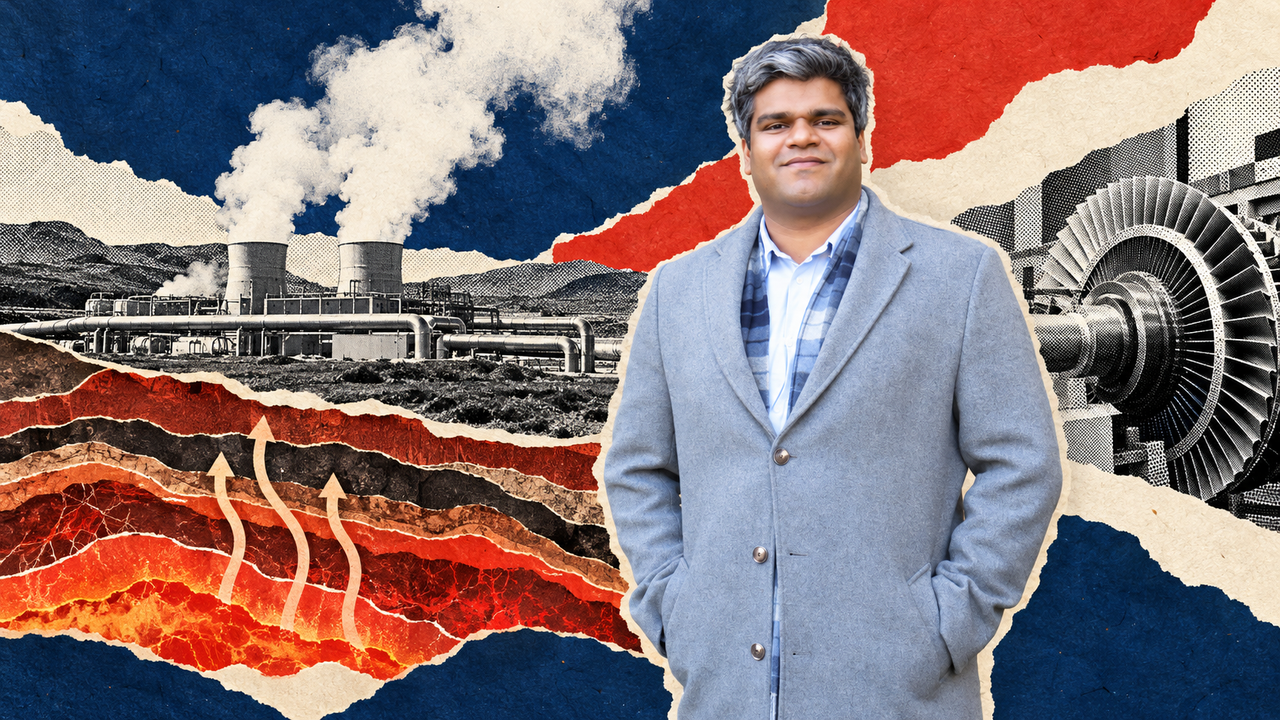
Karan Titus’s route into New Zealand research began with an interest in renewable energy. Born in India and raised in Indonesia, he studied geothermal technology at the University of Auckland before pursuing doctoral research at Canterbury. His work asks a distinctly local question: could the country’s underground heat and forestry residues help generate electricity while removing carbon dioxide?
An Education New Zealand profile, published in May 2025, traced that educational journey. Canterbury’s Sustainable Energy Research Group now lists Dr Karan Titus as a postdoctoral researcher working on carbon-negative geothermal energy.
A research career built around a New Zealand resource
The progression matters for Indian families weighing the value of overseas study. Titus’s experience offers a specific example of specialist education developing into an ongoing research role, rather than a general promise about what a New Zealand qualification delivers.
Education New Zealand reported that his research received a Best Student Paper award at a Carbon and Energy Professionals New Zealand conference. Its account also emphasised the expertise and professional connections he encountered in the geothermal community. Those are features of his experience, not evidence that every international student will follow the same path.
Combining electricity generation with carbon removal
The technical idea brings together geothermal power, bioenergy and carbon storage. Forestry material supplies additional energy. Carbon dioxide from that material can be captured, dissolved in geothermal water and returned underground through reinjection infrastructure.
A 2023 conference paper held in Canterbury’s repository explored four possible configurations through systems modelling. The authors examined electricity output, carbon-storage potential and preliminary costs. Using existing wells was part of the attraction, because it could reduce the need to transport captured carbon elsewhere.
That is a proposal tested through calculations, not a claim that a commercial installation has already achieved the modelled results. The distinction is important when promising climate research reaches a wider audience: a credible engineering pathway still has to survive practical and economic testing.
Looking closely at Ngāwhā
A subsequent journal paper on a theoretical retrofit at Ngāwhā made the question more concrete. Titus worked with Canterbury researchers David Dempsey and Rebecca Peer, alongside Fabian Hanik of Ngāwhā Generation.
Their study considered adding one megawatt of electrical capacity using bioenergy, with carbon dioxide dissolved in the fluid reinjected underground. Under the study’s assumptions, removal could reach 15,900 tonnes of carbon dioxide a year, using about six percent of the Far North’s forestry residues.
The paper describes a theoretical case, and its economic calculations reflect the conditions assumed when it was written. Those figures should not be presented as today’s operating performance or guaranteed project returns. Its significance lies in connecting a scientific concept to an identifiable New Zealand site and resource base.
Beyond a student-success headline
For New Zealand’s Indian community, Titus’s story broadens the picture of contribution beyond familiar accounts of professional migration. Here, an internationally educated researcher is helping examine a difficult national infrastructure problem.
Canterbury’s current research-group description places carbon-negative systems alongside energy-transition modelling and climate resilience. Titus’s work sits within that larger collaborative effort. The next meaningful measure of success is how the research informs testing and decisions, rather than how impressive a projected carbon-removal number looks in isolation.
Source-based feature prepared on 25 October 2026 from the linked institutional profiles and research publications. No new interview was conducted.