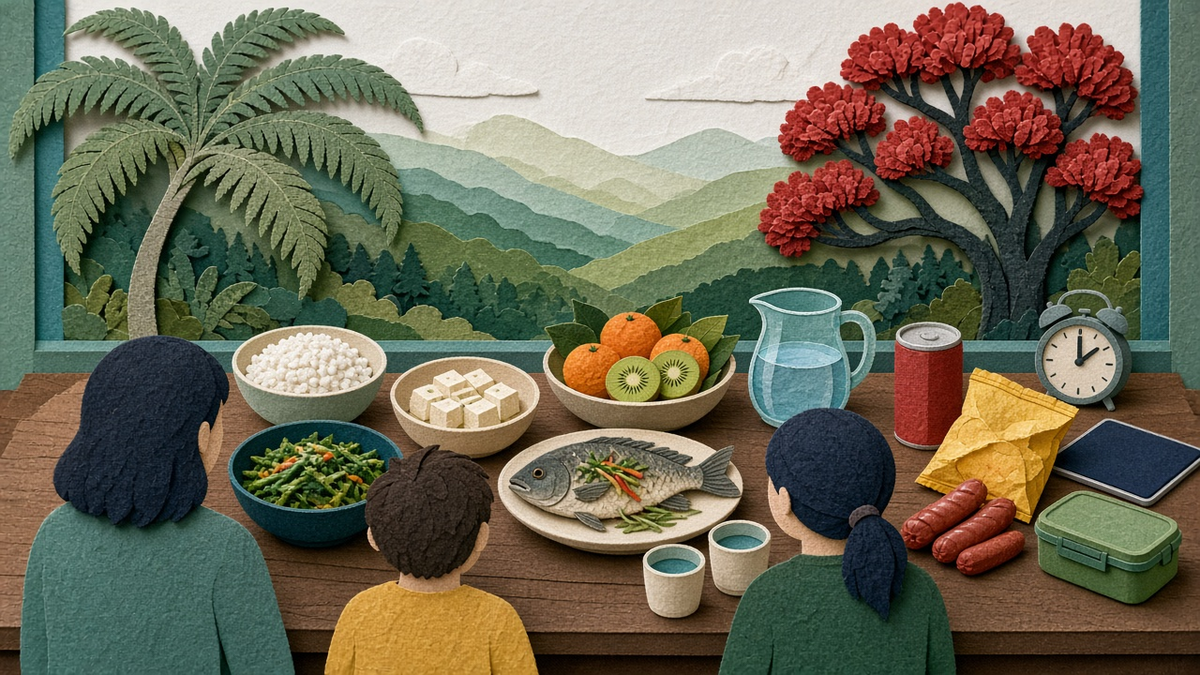
The Ministry of Health has published updated dietary guidelines for children and young people aged 3 to 17. The last version was released in 2012.
Director of Public Health Dr Corina Grey said understanding of what children and young people need in their diet "has advanced in the past 14 years".
The guidelines are written mainly for health practitioners, educators and policy makers, but the recommendations are the same advice your child's doctor, nurse or dietitian is likely to use.
What's new about ultra-processed foods?
This is the first time the children's guidelines have looked at ultra-processed foods (UPFs).
"While the evidence is still emerging, the guidelines recommend children and young people eat little, if any, UPFs that are high in added sugars, salt and saturated fat," Dr Grey said.
The guidelines also say meals and snacks should be "mostly whole foods and minimally processed".
What should children eat every day?
The guidelines recommend a variety of foods from the main food groups every day:
- Plenty of vegetables and fruit, in different types and colours. Fresh, frozen and canned are all suitable.
- Grain foods, mostly whole grain. The examples given include bread, oats, rice, pasta, quinoa, noodles and couscous.
- Milk, yoghurt, cheese or suitable alternatives, mostly unsweetened and lower in fat. Children who don't have dairy should choose calcium-rich alternatives.
- Legumes, nuts, seeds, fish and other seafood, eggs, poultry or red meat with the fat removed. Legumes in the list include beans, chickpeas, peas, lentils and tofu.
The summary says iron and fibre intakes may be too low for some children and teenagers, and asks families to pay particular attention to iron during adolescence, especially for those who menstruate.
What should children have less of?
The guidelines say children and young people should eat little, if any:
- processed meat, such as luncheon, bacon, ham, corned beef, salami and sausages
- fast and fried foods, confectionery, and sweet or salty packaged snacks.
Meals and snacks should have little or no added sugar or sweeteners and be low in salt. If you use salt, the guidelines say to choose iodised salt.
On cooking fats, they recommend unsaturated fats such as canola, sunflower, olive, vegetable or rice bran oil, avocado or peanut butter instead of saturated fats. The saturated fats listed include butter, cream, lard, ghee, palm oil, coconut cream and coconut oil.
What about drinks?
Water should be the first choice, and milk is also a healthy choice. The guidelines say:
- children and young people should not drink alcohol
- under-16s should not drink energy drinks or coffee drinks that are high in caffeine
- children should drink little, if any, sweetened drinks, including low- and no-sugar versions. That covers cordial, fruit drinks, fruit juice, fizzy drinks, sports drinks, and flavoured milk and water.
Sports drinks are "generally unnecessary" for children and young people, including those who play sport, the summary says.
Do the guidelines say anything about sleep and screens?
Yes. They include advice on a "healthy 24 hours":
- Sleep: 10 to 13 hours a night for 3 and 4-year-olds, 9 to 11 hours for 5 to 13-year-olds, and 8 to 10 hours for 14 to 17-year-olds, with consistent bed and wake-up times.
- Activity: at least an hour a day of moderate to vigorous activity for 5 to 17-year-olds, and at least three hours of activity a day for 3 and 4-year-olds.
- Screens: no more than one hour a day for 3 and 4-year-olds, and no more than two hours of recreational screen time a day for children over 5.
They also encourage regular mealtimes, eating together when possible, and keeping meals free of devices and screens.
Do they take culture into account?
The summary says families' cultural practices, access to healthy food and cooking skills all affect food choices, and that these should be considered when applying the guidelines. It also asks adults to focus on healthy habits rather than talking about a child's weight, shape or appearance.
If your child has a medical condition or special dietary needs, the ministry says health practitioners are best placed to give tailored advice.
If the cost of food is the bigger worry, our earlier article looks at where Asian families can find food support in New Zealand.