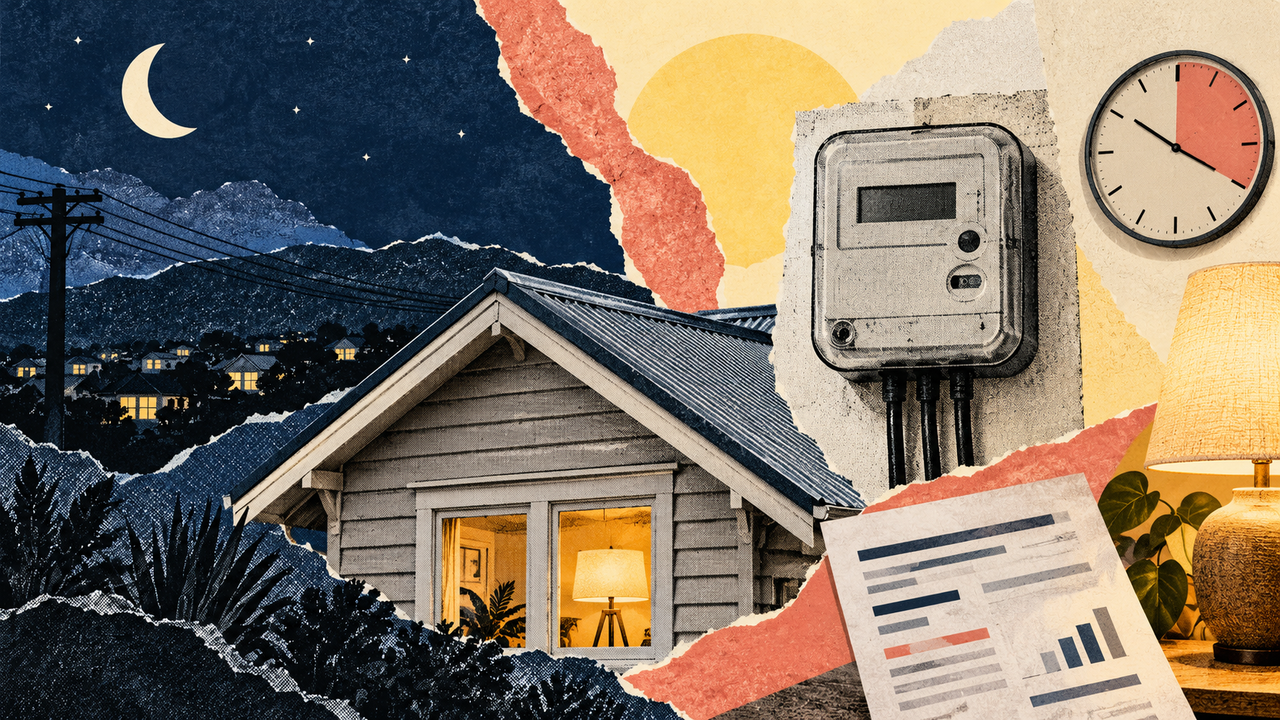
A cheaper overnight electricity rate looks attractive. For a household that needs most of its power at breakfast and dinner, the saving can be harder to find.
New Zealand's electricity reforms aim to give consumers more pricing choices. Reporting on household costs and research on energy hardship show why those choices will work differently from one home to another.
The regulator's approach
The Electricity Authority has confirmed rules requiring large retailers, with at least five percent market share, to offer off-peak pricing options. Its stated aim is to reward demand that can move away from busy periods and reduce pressure on the system.
This sits alongside a separate billing package covering clearer bills, annual checks for a better plan within a retailer's offerings and limits on back billing. The Authority's billing page describes a move in the commencement date from 30 October 2026 to 1 April 2027. Consumers should check the current implementation notices rather than assume every reform starts together.
The household test
In a 14 June 2026 report for 1News, EECA researcher Gareth Gretton explained that a plan's value depends on the household's appliances and routine. Electric vehicle charging or some water heating may be easier to shift than heating a room when people need to use it.
Daily fixed charges and peak rates also matter. A low advertised rate for a few hours cannot tell a family what its annual bill will be. Comparing an offer against actual usage gives a more useful answer.
The hardship perspective
Writing in The Conversation in July 2025, in an article republished by RNZ, University of Otago researcher Kimberley O'Sullivan argued that reform also needed to address housing quality and affordability. She drew on research into the consequences of inadequate heating and disconnection.
That is an older analysis, rather than a new October announcement. Its question remains relevant to the pricing debate: how much can a household change its electricity use when the home is cold or the family cannot afford enough power in the first place?
Before changing plans
Check the full tariff, the hours that count as peak or off-peak, and any contract conditions. Ask for a comparison using your own consumption history. Tenants and people sharing a home may also need to establish who controls the account and whether the household can realistically change its routine.
Explainer. Reviewed 22 October 2026. Earlier reporting is identified by date; no household saving is guaranteed.