Preliminary results snapshot: 8 November 2026, 2:23am NZDT. Special votes are not included.
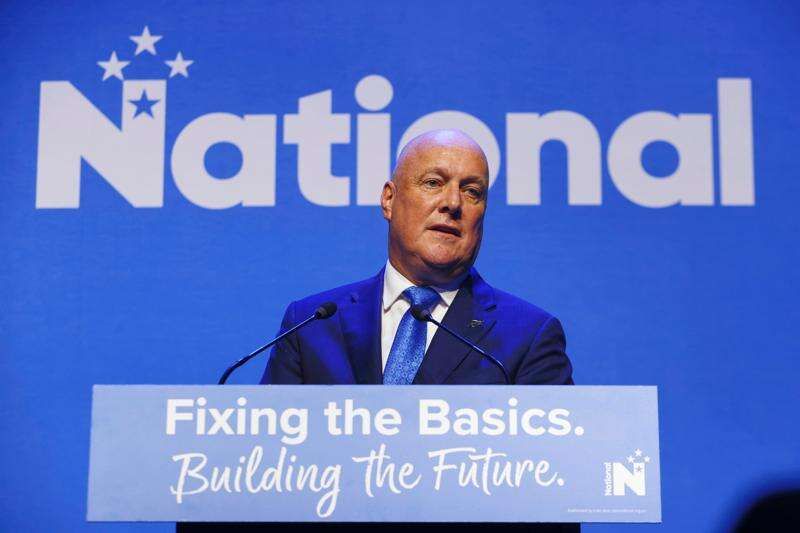
National, ACT and New Zealand First were projected to hold a narrow parliamentary majority early on Sunday, but Christopher Luxon said the election was “too close to call” as New Zealand waited for special votes.
The Electoral Commission’s preliminary count at 2:23am put the three parties on a combined 67 seats in a projected 131-seat Parliament, where 66 would be needed for a majority. That is a possible route back to government, not a confirmed second term.
Labour was narrowly ahead in the party vote, with 710,330 votes to National’s 706,680 — a gap of 3,650. National nevertheless had the largest projected caucus, at 42 seats, because of its electorate leads.
The preliminary numbers
At this snapshot, 9,389 voting places had reported results, with the reporting rate shown as 100.0%. That is the share of voting places reporting, not the percentage of all votes counted. Special votes remain excluded, so this is still a preliminary result.
| Party | Party votes | Party vote | Projected seats |
|---|---|---|---|
| Labour | 710,330 | 29.36% | 36 |
| National | 706,680 | 29.21% | 42 |
| Greens | 321,902 | 13.30% | 16 |
| ACT | 264,121 | 10.92% | 13 |
| NZ First | 236,630 | 9.78% | 12 |
| Opportunity | 144,298 | 5.96% | 7 |
| Te Pāti Māori | 13,845 | 0.57% | 5 |
Source: Electoral Commission election-night feed, updated at 2:23:20am NZDT; cross-checked against RNZ’s results page. Seats are projections, and electorate leads are not confirmed wins.
Labour, the Greens and Te Pāti Māori together were projected to hold 57 seats. Opportunity was on seven seats, with 5.96% of the party vote — above the 5% threshold needed to qualify for list seats without winning an electorate.
The projected Parliament included 11 overhang seats. An overhang occurs when a party wins more electorate seats than its share of the party vote would otherwise entitle it to. National’s projection included 42 electorate seats and no list seats.
Luxon: “Too close to call”
Addressing supporters at Auckland’s Viaduct Events Centre around midnight, Luxon said National had “a pathway to forming the next government”, RNZ reported.
“I have to tell you right now it is too close to call,” he said.
Labour had not conceded. Chris Hipkins said every vote mattered and must be counted, according to RNZ’s election-night report.
What happens next?
The election-night count excludes special votes. Those votes, along with the checks carried out before official results are declared, can change party totals, close electorate races and the allocation of seats.
The Electoral Commission expects to publish official results on Friday 27 November. Government formation also depends on parties reaching agreements for parliamentary support; a seat projection is not itself a coalition deal.
Luxon said caretaker conventions would apply in the meantime, RNZ reported.
For more background, read our guide to preliminary results and special votes, or find RNZ’s election-night coverage here.