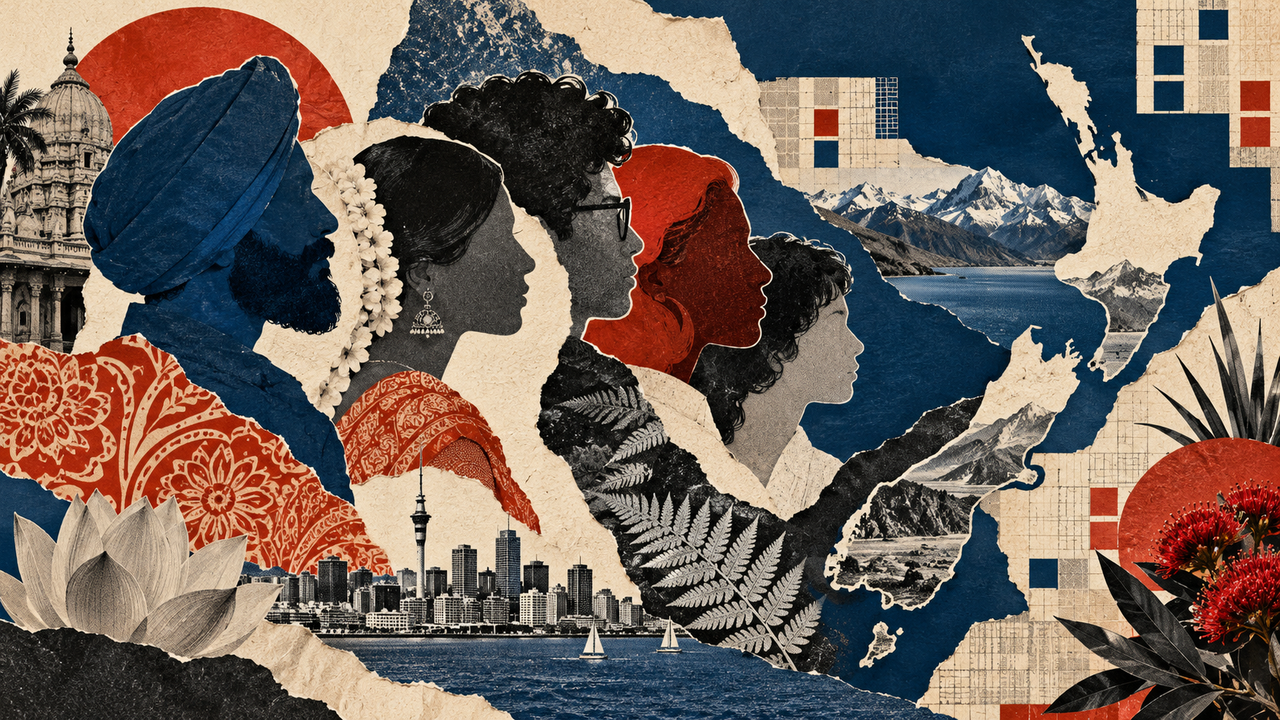
Indian New Zealand is often described with a single population figure. The 2023 Census counted 292,092 people identifying with the Indian ethnic group. That is a substantial presence in the country, but a headline number cannot explain the different lives, identities and family histories behind it.
Stats NZ’s Indian ethnic-group summary records a median age of 32.4 years, compared with 38.1 nationally. It also reports that 72.9 percent were born overseas. These are measurements from 2023, not an estimate of the community’s size or composition in October 2026.
Ethnicity is about belonging
The most important distinction appears in Stats NZ’s definition of ethnicity. Ethnicity describes cultural affiliation and how people identify. It is different from nationality, citizenship, ancestry and place of birth. People may identify with more than one ethnic group and be counted in each relevant group.
An Indian ethnic-group count therefore cannot be used as a count of Indian passport holders. Nor should a person’s birthplace be treated as a complete description of their identity. These distinctions matter whenever population statistics enter arguments about belonging, migration or representation.
They also make room for identities that overlap. A census category can help make a community visible without requiring every person within it to have the same background. Reading the definitions before comparing the numbers prevents a simple table from becoming a misleading story.
A snapshot, not a live population counter
New Zealand’s census took place on 7 March 2023. Its usually resident population count covers people who normally live in New Zealand and were present on census night. Stats NZ’s population-count release explains why resident population estimates are different: they also account for residents temporarily overseas and people missed by the census.
This matters when older census findings circulate as current news. The figures remain valuable for understanding the population at a particular point in time. They cannot, by themselves, show how many people arrived, departed or were born in the years since.
A responsible account should name the census year, identify the measure and avoid turning a historical comparison into a claim about today. Precision is especially important when readers are comparing statistics drawn from different releases.
Looking closer than the national total
The Ministry for Ethnic Communities’ data resources provide another route into this picture. Its Census 2023 dashboard allows exploration by ethnicity, location, religion, language and age. The ministry also explains that public-service data systems can make some ethnic communities difficult to see.
The practical implication is straightforward: a national average should start questions, rather than finish them. A community organisation considering an activity for older residents needs a different view from one thinking about multilingual information. Neither should assume that the largest category represents everyone equally.
For an editor or community organiser, that also means resisting the temptation to select only the most striking statistic. Context about the people being counted is part of the finding, not an optional footnote.
For readers, the census offers a way to replace vague impressions with evidence. Its greatest value lies in combining the overall picture with attention to difference. Indian New Zealand becomes easier to understand when people are allowed to be more than a number, and the numbers are used for what they actually measure.
Source-based explainer. Sources checked on 25 October 2026. No original interviews were conducted.