A parking enforcement device that sticks to a car's windscreen and stops the driver from leaving until they pay is being introduced in New Zealand.
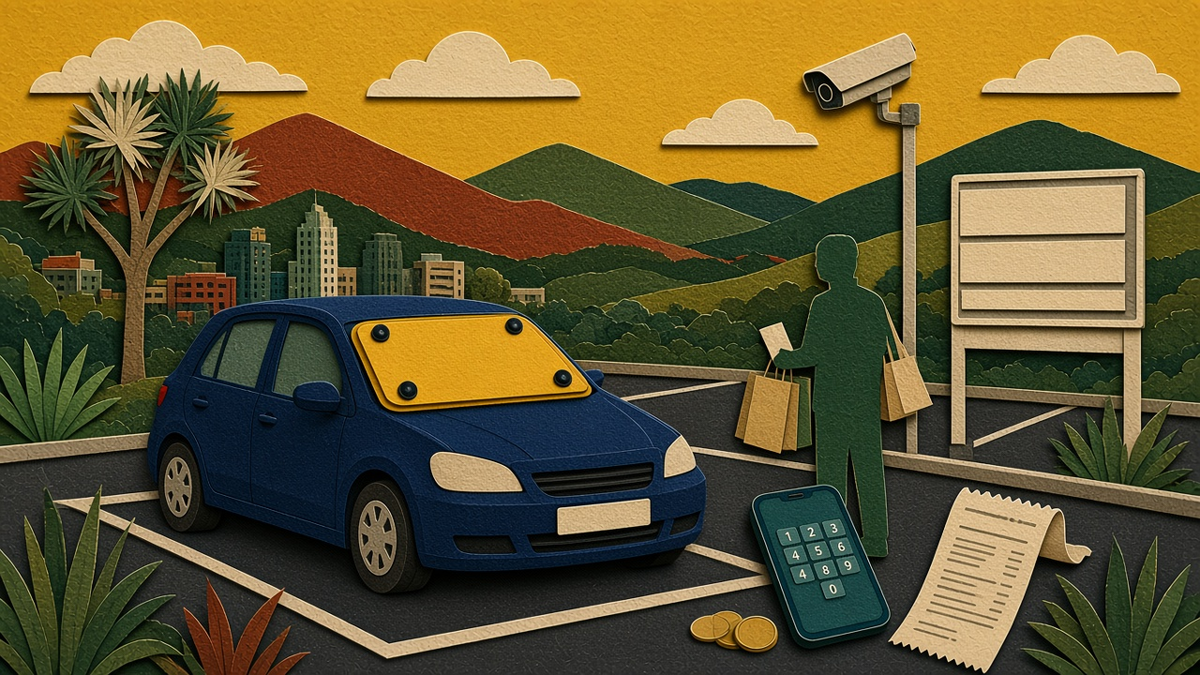
The Barnacle is a large yellow panel that attaches to the windscreen with suction cups. Zavo Limited, the parking compliance company that holds the New Zealand licence for it, told The Press it has released the device in Christchurch, Queenstown and Wellington.
Zavo director Tim Howe told The Press on 16 November he expected the first Barnacles to appear around Christchurch "in the next week or two", most likely in car parks enforced by ParkChek, including those run by Central Park. Queenstown could take a little longer. Zavo's website lists Auckland, Hamilton, Hawke's Bay, Whangārei, Nelson and Dunedin as later locations, according to the NZ Herald. No date has been given for Auckland.
Where could I see one?
The device is aimed at private parking, not council streets. Zavo says it can be used by private parking operators, residential and body corporate managers, workplaces, campuses and retail and commercial property owners, CarExpert reported.
Howe told the Herald most people will never see one, and that the company was targeting "the hardcore of people who don't believe in parking compliance".
How does it work?
According to Zavo and the Herald's reporting:
- An enforcement officer records the vehicle's details and attaches the Barnacle to the windscreen.
- The driver follows the instructions on the device and pays.
- The driver gets a release code, unlocks the device and removes it.
- The driver returns it to a designated drop-off point, which Howe said would usually be on site. The Press reported a deposit is returned once the device is put in the recovery bin.
Drivers can also ask for a Zavo staff member to come and remove it, but they have to wait with the car until someone arrives.
Howe told the Herald the device lets operators "quickly release those who made an honest mistake". The device is GPS-equipped and sounds an alarm if it is tampered with, according to the manufacturer.
How much can they charge?
Howe told the Herald the company would charge a maximum of $100, saying legislation caps the price. He told The Press he planned to stick to the $100 limit set for wheel clamps, though he was not sure whether it necessarily applied to the Barnacle.
The Land Transport Act caps what a private operator can charge to remove an "immobilising device" at $100 including GST. The Act defines an immobilising device as "a wheel clamp or other device that is intended to immobilise a motor vehicle or restrict or impede its movement". It also says the operator must remove the device as soon as reasonably practicable after the fee is paid, and must be reasonably available to respond. Breaking those rules is an offence, with fines of up to $3,000 for an individual or $15,000 for a company.
Whether the Barnacle is covered has not been tested, but on its wording the definition is not limited to wheel clamps.
What if I think it was put on unfairly?
Consumer Protection, run by MBIE, has general advice for anyone whose car is clamped on private land:
- Clamping on private land is only lawful if the operator was authorised by the landowner and you were not entitled to park there.
- Ask who authorised it, and get the operator's name and a receipt.
- Don't pay more than $100.
- Take photos of the signs, or the lack of them, and where you parked.
- Pay what you need to get your car back, then dispute it. Unresolved disputes can go to the Disputes Tribunal.
Don't try to drive off with it or force it off. Howe told The Press that removing it the wrong way could smash the windscreen, and that taking or damaging the device could lead to theft or wilful damage claims.
How do I avoid one?
Read the signs at the car park entrance and at your space, especially time limits, permit-only bays and customer-only parking. Some private car parks use number-plate cameras, and the Herald reported Zavo's job ads mention using automatic number plate recognition to identify parking breaches.
If you drive in Christchurch, our earlier piece explains the switch to Motu Move on Christchurch buses. For summer trips, see our story on DOC's new paid parking at Goat Island.