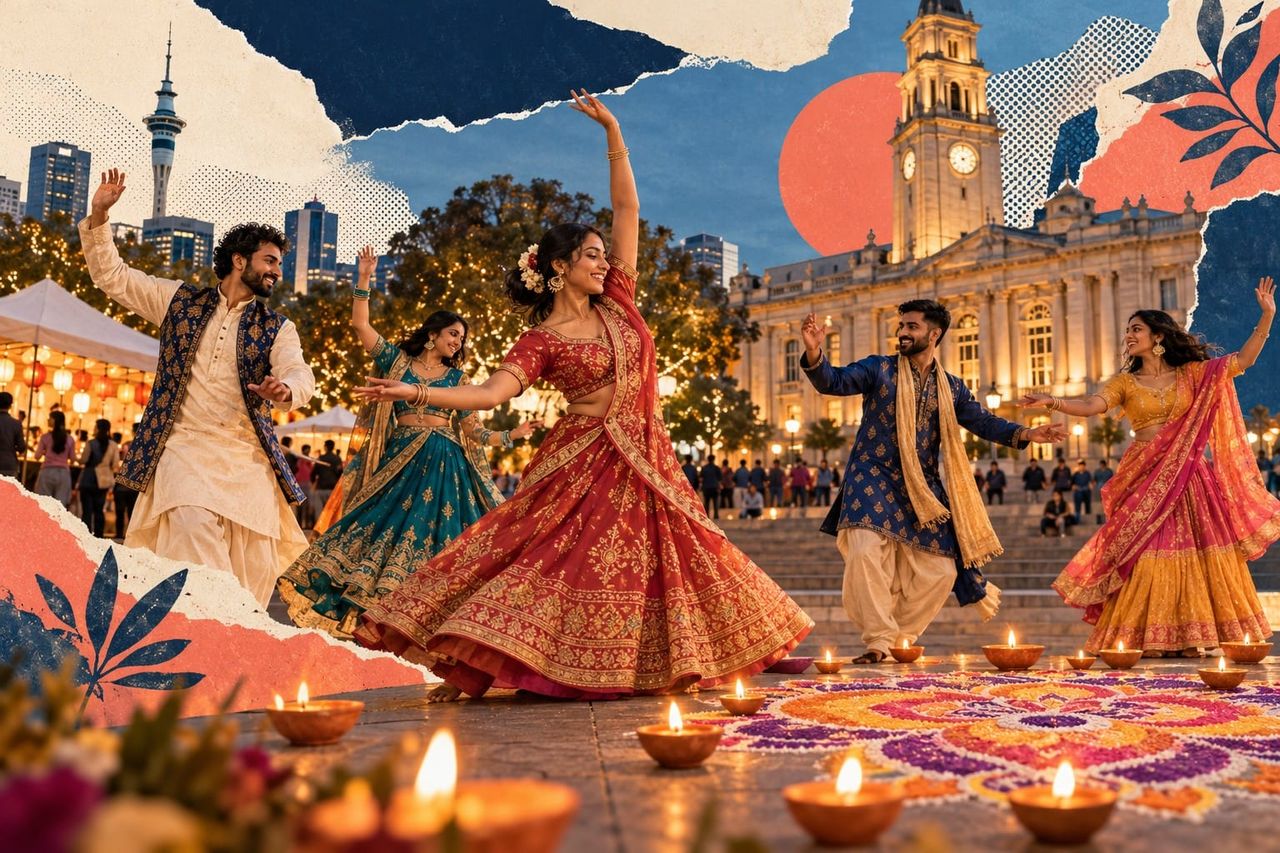
When Arnav Taode went to Auckland Diwali in 2014, he had been in New Zealand for less than six months. The festival offered a welcome in a city he was still getting to know. Twelve years later, he is helping organise it.
Taode's account, reported by RNZ, gives this weekend's festival a more personal frame than a list of performances and food stalls. A public celebration can be a place where a recent arrival recognises something familiar and sees it shared with a much wider crowd.
The free Auckland Diwali Festival runs at Aotea Square and Queen Street on 31 October and 1 November, from noon to 9pm each day, according to the official festival website.
Room for more than Bollywood
Taode grew up in a military family and experienced different parts of India. In RNZ's feature, he describes wanting festival visitors to encounter that cultural variety, including traditions that receive less attention than the main-stage dance performances.
The wider programme includes classical music, Ramayan drama and craft activities. RNZ also highlights a Baaya Design exhibition, Living Arts activities at the Aotea Centre and cinema events connected with the celebrations.
Those activities give visitors different ways to participate: watching a performance, spending time with a craft or attending an event away from the busiest part of the square. Individual sessions and associated cinema events can have separate arrangements, so free festival entry should not be assumed to cover every related activity.
Different traditions, shared public space
RNZ's reporting also looks at the Sikh observance of Bandi Chhor Divas. A community celebration had already taken place the previous Saturday, with organiser Jaspreet Singh discussing recognition and belonging.
That gathering included gatka, kavisheri, kirtan and langar, the shared community meal. It was a separate event that had already happened, rather than an activity visitors should expect to find on this weekend's festival timetable.
Keeping those distinctions helps avoid treating South Asian communities as if they all observe the same traditions in the same way. A major public festival can introduce visitors to a range of practices while leaving room for their different histories and meanings.
A place for newcomers to join in
The official programme presents Diwali as a family-friendly city celebration. Taode's recollection adds another reason people may attend: it can offer an early point of connection for someone building a life here.
For visitors deciding how to spend their time, the smaller cultural sessions are worth considering alongside the main stage. The official website carries the current programme and festival information, including any changes to scheduled activities. Families can use it to choose a few events that suit their interests before heading into the city.